Industrial and commercial energy storage solutions
With the development of the economy and social progress, the peak valley difference in the load curve is becoming larger and larger. Industrial and commercial energy storage systems can effectively improve the impact of peak power shortages on the development of local economy, industry, and commerce, and promote the harmonious development of the social economy.
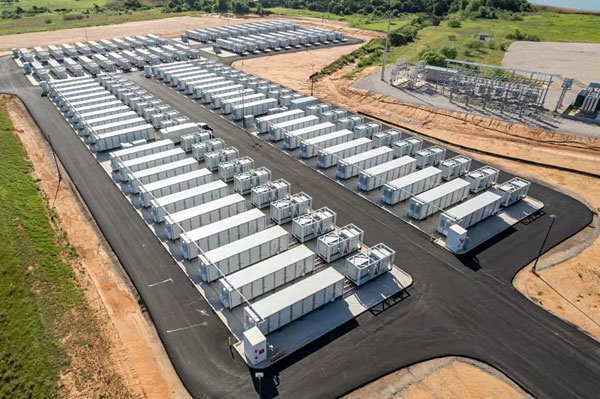
The industrial and commercial energy storage solution is designed to meet the electricity needs of industrial and commercial users, aiming to improve energy efficiency, reduce electricity costs, enhance the stability and reliability of power supply, and help enterprises achieve energy-saving and emission reduction goals.
By integrating advanced energy storage technology, intelligent control systems, and comprehensive energy management strategies, we aim to create an efficient, flexible, and sustainable power storage system for industrial and commercial users.

High electricity prices
☑ The continuous widening of the time of use price difference between industrial and commercial electricity prices, as well as the gradual promotion of market-oriented electricity trading in the future, have caused a sustained increase in electricity costs for industrial and commercial sectors
Fault power outage
☑ When a local power grid or electrical equipment failure causes a sudden power outage, it has a serious impact on the normal operation of industry and commerce, and even causes significant economic losses
Power grid restriction
☑ The popularization of new energy poses a huge challenge to the stable operation of the power grid, which may lead to local power restrictions and affect the normal operation of local industries and businesses
Volume depletion
☑ In the era of electrical engineering, equipment updates and iterations are frequent, which constantly increases the demand for electricity. When the power capacity of enterprises is insufficient, it is difficult to apply for capacity expansion, which restricts the electricity consumption of enterprises
1. System components

1) Energy storage battery: Lithium iron phosphate batteries are selected, which have the characteristics of high energy density, long cycle life (up to 6000 times or more), high safety, and good stability. According to the electricity load and energy storage needs of industrial and commercial users, different capacity specifications of battery packs can be provided, ranging from several hundred kilowatt hours to several megawatt hours. For example, for a medium-sized factory, a 1-5MWh energy storage battery system can be equipped.
2) Battery Management System (BMS): Responsible for comprehensive monitoring and management of energy storage batteries, including real-time monitoring of battery voltage, current, temperature and other parameters, to achieve protection functions such as overcharging, overdischarging, overcurrent, short circuit, etc., ensuring the safe and stable operation of the battery. At the same time, BMS also has battery balancing function, which can effectively extend the service life of the battery and improve the overall performance of the battery pack.
3) Power Conversion System (PCS): As a bridge between the energy storage system and the power grid, PCS achieves bidirectional power conversion between DC and AC. During charging, convert AC power from the grid into DC power to charge the battery; When discharging, invert the DC power of the battery into AC power and feed it into the grid or supply it to internal loads of industrial and commercial users. PCS has high-precision control capabilities and can accurately adjust the charging and discharging power according to grid dispatch instructions or local energy management system strategies. It has a fast response speed and can effectively track load changes and grid demand.

4) Energy Management System (EMS): This is the core intelligent control unit of the entire industrial and commercial energy storage system. EMS real-time collects operational data of various components of the energy storage system, voltage, frequency, phase and other information of the power grid, as well as the electricity load curve of industrial and commercial users. Through advanced data analysis and optimization algorithms, it formulates the optimal energy storage and release strategy. For example, during periods of low electricity consumption, controlling the charging of energy storage systems; During peak electricity consumption periods, the discharge mode of the energy storage system is determined based on the difference in electricity prices and the production needs of the enterprise, in order to achieve the goal of peak shaving and valley filling and reduce electricity costs. At the same time, EMS can also participate in frequency and voltage regulation auxiliary services of the power grid, improve the stability and power quality of the power grid, and have remote monitoring and operation management functions, making it convenient for enterprise users to real-time grasp the system operation status, timely discover and handle faults.

5) Electrical connection and protection equipment: including circuit breakers, contactors, fuses, lightning arresters, etc., to ensure the safety and reliability of the energy storage system during the electrical connection process, prevent safety accidents caused by electrical faults, and protect the components of the energy storage system and the electrical equipment of industrial and commercial users from the impact of electrical disasters such as lightning strikes, overcurrent, and overvoltage.

2. System functions and application scenarios
1) Peak shaving and valley filling: Industrial and commercial users usually face a large difference between peak and valley electricity consumption, with high peak electricity prices and low valley electricity prices. The energy storage system can use low-priced electricity to charge at night or during low electricity consumption periods, and discharge during peak electricity consumption periods during the day to supply power to internal loads of the enterprise, thereby reducing the enterprise's electricity costs. Taking a factory with a daily electricity consumption of 10000 kWh and a peak valley electricity price difference of 0.8 yuan/kWh as an example, if the energy storage system can transfer 2000 kWh of peak electricity consumption, it can save 1600 yuan in electricity bills per day and approximately 580000 yuan per year.
2) Demand response and capacity management: When the power grid faces power supply pressure or peak electricity demand, the industrial and commercial energy storage system can quickly adjust the charging and discharging power according to the power grid dispatch instructions, participate in demand response projects, reduce the electricity demand of enterprises during peak hours, and alleviate the power supply pressure of the power grid. At the same time, the energy storage system can serve as a backup power capacity for enterprises. When enterprises add new electrical equipment or expand production scale, there is no need to immediately upgrade the grid access capacity. Through the energy storage and release functions of the energy storage system, it can meet the temporary power demand growth of enterprises and reduce the cost of power expansion.
3) Emergency power supply guarantee: In the event of a power outage or failure in the power grid, the energy storage system can quickly switch to off grid operation mode, providing uninterrupted power supply for key equipment and production processes of industrial and commercial users, ensuring that the production and operation activities of the enterprise are not affected or minimizing losses. For example, for industrial and commercial places such as data centers, hospitals, and communication base stations that require extremely high reliability of power supply, energy storage systems can ensure the continuous operation of their core businesses in the event of power grid failures, avoiding serious consequences such as data loss, medical accidents, or communication interruptions caused by power outages.

4) Power quality optimization: Some large electrical equipment (such as motors, welding machines, etc.) within industrial and commercial users may experience voltage fluctuations, harmonic pollution, and other power quality issues during startup or operation, which can affect the normal operation and service life of other electrical equipment. The energy storage system, through its fast power regulation capability, can instantly compensate for voltage fluctuations, absorb or cancel harmonic currents, improve the internal power quality of enterprises, and enhance the operational efficiency and reliability of electrical equipment.
3. System installation and maintenance
1) Installation: A professional engineering team designs and installs personalized energy storage systems based on the site conditions, power layout, and power system architecture of industrial and commercial users. Energy storage batteries and PCS are usually installed in dedicated distribution rooms or containerized energy storage power stations, ensuring good ventilation, suitable temperature, and complete fire and waterproof measures in the installation environment. Electrical connection equipment must be wired and connected strictly in accordance with electrical installation specifications to ensure reliable grounding and good insulation performance of the system. During the installation process, it is necessary to communicate and coordinate with the local power grid company, handle relevant grid connection procedures, and ensure that the energy storage system can be smoothly connected to the power grid and achieve safe and stable operation.

2) Maintenance: Establish a regular maintenance system and arrange professional technicians to inspect and maintain the energy storage system. The maintenance content includes capacity testing of energy storage batteries, voltage balance inspection of individual batteries, inspection of battery pack appearance and connecting components; Inspect and maintain the power module, control circuit, and cooling system of PCS; Upgrade and update the software system of EMS to ensure the progressiveness and stability of its control strategy and functions; Check the electrical connections and protective equipment to ensure that they are firmly connected and operate reliably. At the same time, establish a comprehensive operation and maintenance management file to record the operation data, maintenance status, fault handling records, and other information of the energy storage system, in order to timely discover potential problems and hidden dangers of the system, take effective preventive measures, extend the service life of the energy storage system, and ensure that the system is always in the best operating state.
Related Solutions

