Ground power plant photovoltaic solution
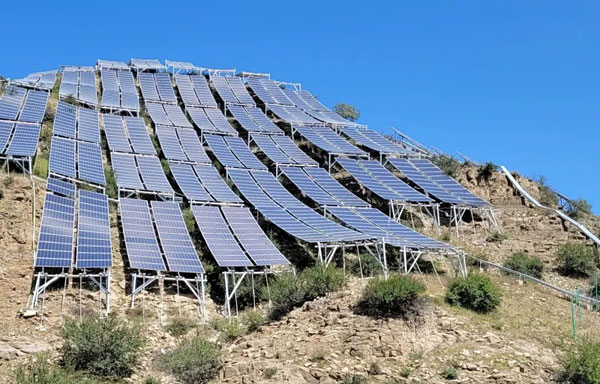
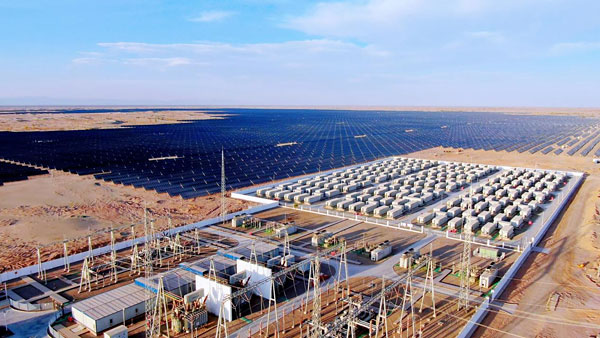
As an important facility for large-scale utilization of solar energy, ground-based photovoltaic power stations convert solar energy into electricity by constructing photovoltaic arrays on open ground, and connect it to the power grid to supply power to a large area.
It has the characteristics of large power generation and stable system, which is of great significance in promoting the transformation of energy structure and sustainable development.
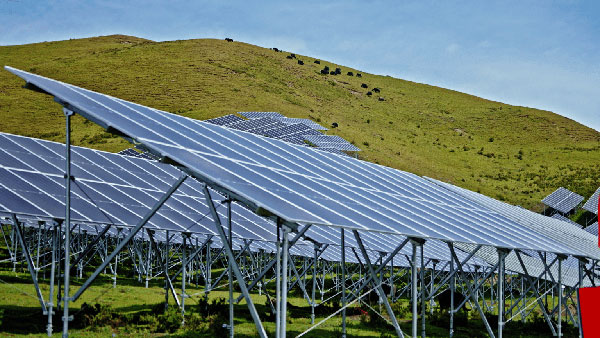
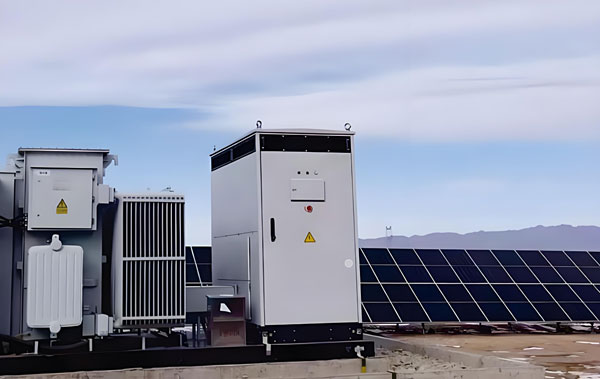
The centralized photovoltaic system solution is suitable for large ground power stations, with a single inverter typically exceeding 1000KW. The entire system (below 35KV) is equipped with photovoltaic panels, DC combiner boxes, centralized inverters, box type transformers, and other equipment.
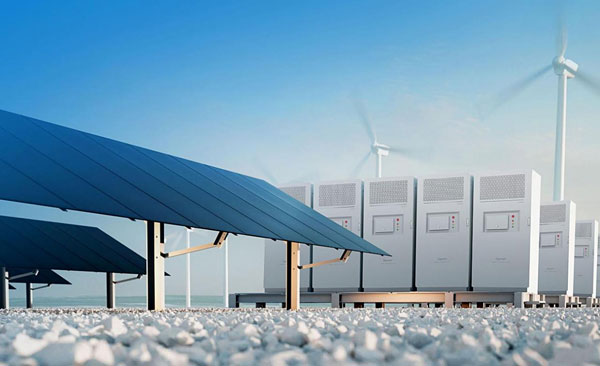
1. System Design
(1) Site selection and planning
Taking into account factors such as sunshine resources, land properties, topography, transportation, and grid access conditions.
Priority should be given to selecting land parcels with an average annual sunshine duration exceeding X hours, flat and open terrain, stable geological conditions, close proximity to power grid access points, and reasonable land costs, such as western deserts, Gobi or wastelands.
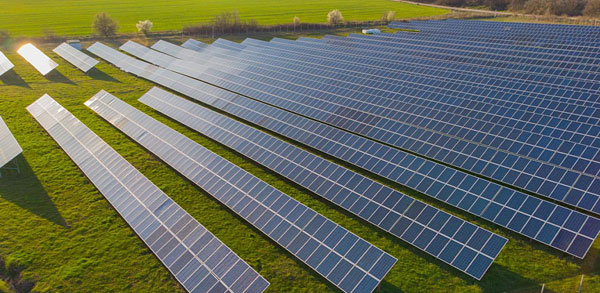
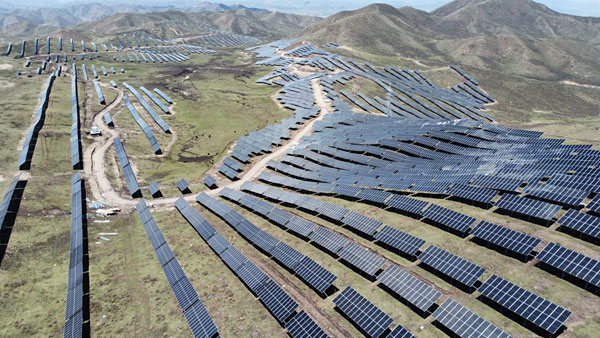
Based on the site conditions and construction scale, reasonably plan the layout of photovoltaic arrays, road routes, and the location of booster stations to improve land utilization and power station operation efficiency.
(2) Selection of Photovoltaic Modules
Select suitable photovoltaic modules based on project investment budget,performance requirements, and local environmental characteristics. Monocrystalline silicon modules have high conversion efficiency and low attenuation, but relatively high cost; Polycrystalline silicon components have high cost-effectiveness and wide applications; Thin film components are lightweight, have good low light performance, and are suitable for specific scenarios. At the same time, it is necessary to consider parameters such as component power, size, wind and pressure resistance, and temperature coefficient to ensure stable and efficient operation under different light intensities and temperature environments.
(3) Inverter selection
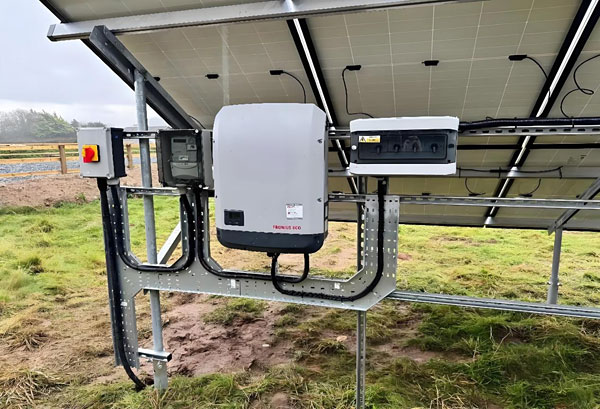
Centralized inverters are suitable for large ground power stations, with high power, low cost, and easy centralized management and maintenance, but they require high consistency for photovoltaic arrays;
Multi channel MPPT tracking of string inverters can effectively cope with component differences and shadow occlusion, with high power generation efficiency and strong system flexibility, but the cost per unit is relatively high; Distributed inverters combine the advantages of both and have application advantages in ultra large power plants. It is necessary to comprehensively consider factors such as power station scale, component layout, terrain conditions, and cost-effectiveness to determine the inverter type and capacity configuration.
(4) System architecture
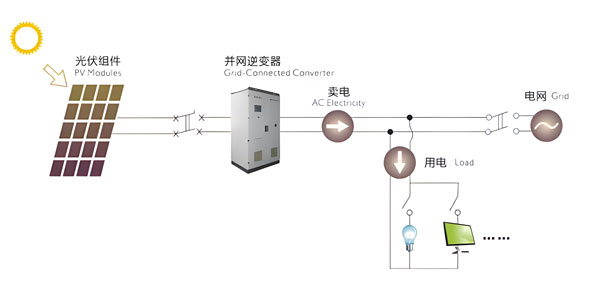
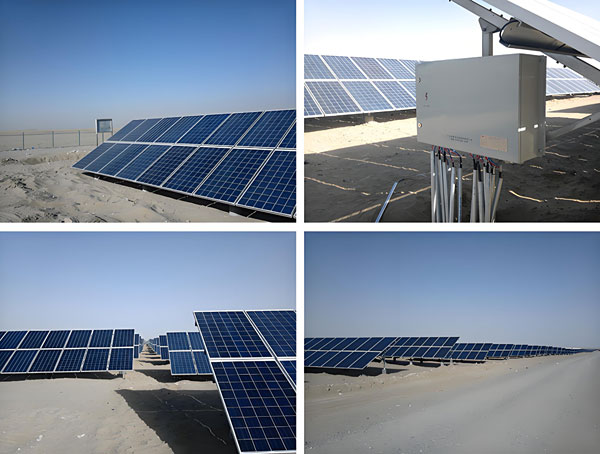
Adopting a centralized grid connection architecture, photovoltaic modules are connected in series to form photovoltaic strings. Multiple photovoltaic strings are connected in parallel to a DC combiner box, and after convergence, they are connected to a centralized inverter to convert into AC power. Then, they are raised to the grid connection voltage level (such as 110kV, 220kV, etc.) through a step-up transformer, and finally connected to the grid. The system is equipped with comprehensive monitoring, protection, and metering devices to ensure the safe and stable operation of the power station and accurate measurement of electrical energy.
2. Program features
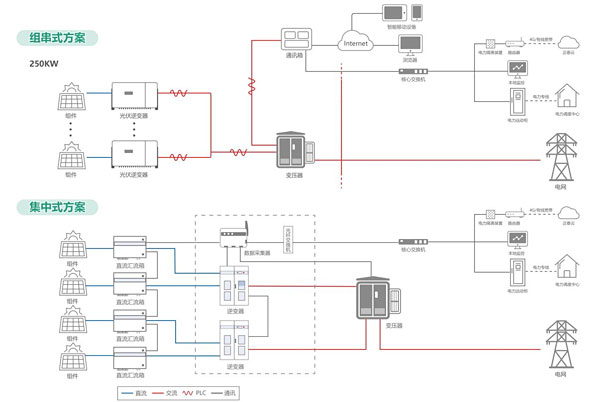
>String scheme
1. Multiple MPPT channels to improve power generation efficiency
2. Ultra large inverter power effectively reduces equipment costs
3. Advanced PID solution effectively suppresses component attenuation
4. The protection level of the inverter reaches IP66, and the C5 shell has anti-corrosion capability, suitable for various harsh outdoor environments
5. The power stations are uniformly connected to the cloud management platform to centrally manage the power stations scattered in different regions
>Centralized solution
1. 1000/1500V centralized solution effectively reduces system costs
2. With a small number of devices, operation and maintenance are convenient
3. The power factor can reach 0.8, meeting the requirements of power grid dispatching
4. The power stations are uniformly connected to the cloud management platform to centrally manage the power stations scattered in different regions
Construction
(1) Basic construction
Design suitable foundation forms based on geological survey reports and installation requirements for photovoltaic modules and brackets, such as concrete cast-in-place pile foundations, precast concrete foundations, or spiral steel pile foundations.
Strictly follow the construction specifications for foundation construction, ensure that the foundation strength, depth, and verticality meet the requirements, and provide stable support for the installation of photovoltaic arrays.
(2) Installation of photovoltaic array
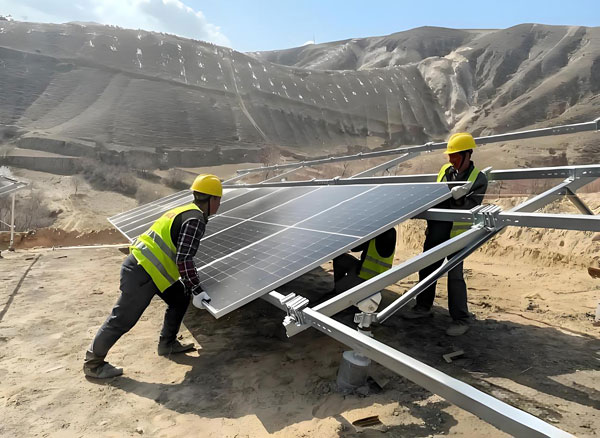
According to the design layout and installation process requirements, proceed with the installation of photovoltaic brackets and photovoltaic modules in sequence.
The installation of the bracket ensures that the flatness and angle meet the design values. When installing components, attention should be paid to firm connections and good electrical insulation to prevent problems such as looseness and short circuits.
During the installation process, ensure proper protection of the finished product to prevent scratches and damage to the surface of the components.
(3) Electrical system installation
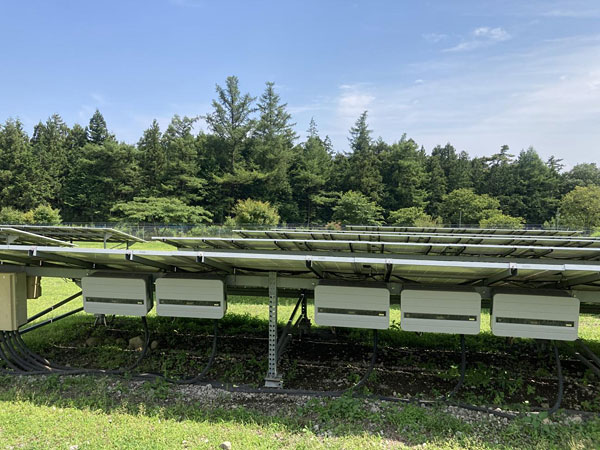
Installation and commissioning of electrical equipment including inverters, step-up transformers, switchgear, cable laying, etc.
Strictly follow electrical installation specifications and equipment manufacturer requirements to ensure correct and reliable electrical connections, neat and beautiful wiring, and good insulation performance.
After installation, conduct electrical performance testing and system integration debugging to ensure the normal operation of the electrical system and smooth grid connection of electrical energy.
(4) Construction of lightning protection grounding system
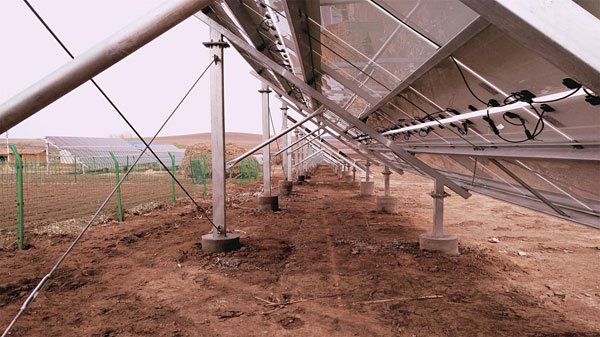
To ensure the safety of power station equipment and personnel, it is necessary to construct a comprehensive lightning protection and grounding system.
Install lightning rods or lightning strips in the photovoltaic array area to reliably ground the metal shells of photovoltaic module frames, brackets, inverters, step-up transformers, and other equipment. The grounding resistance value should meet the specification requirements (generally not greater than 4 Ω).
Regularly inspect and maintain the grounding system to ensure its effectiveness.
3. Operation and maintenance management
(1) Monitoring system
Establish a comprehensive monitoring system to monitor in real-time the operating parameters (such as power generation, voltage, current, power, temperature, etc.) of photovoltaic modules, inverters, boost stations, and other equipment, as well as the environmental parameters of the power station (such as light intensity, wind speed, temperature, etc.).
By monitoring the system in a timely manner, equipment failures, abnormal operations, and environmental changes can be detected, providing data support and warning information for operation and maintenance work.
(2) Inspection and maintenance
Establish a regular inspection system and arrange professional operation and maintenance personnel to conduct daily, monthly, and annual inspections of the power station. Daily inspections mainly check the appearance, operating sound, heat dissipation, cable connections, etc. of equipment; Increase the analysis and performance testing of equipment operation data during monthly inspections; Conduct comprehensive equipment maintenance, system performance evaluation, and develop equipment inspection plans during annual inspections. During the inspection process, promptly record and address any issues discovered to ensure the normal operation of the power station equipment.
(3) Fault handling
Establish a rapid response fault handling mechanism. When the monitoring system issues a fault alarm or the operation and maintenance personnel discover a fault during inspection, quickly organize technical personnel to conduct fault investigation and analysis, and determine the cause and location of the fault. Timely take corresponding maintenance measures based on the fault situation, such as replacing faulty components, repairing electrical connections, restarting equipment, etc., to restore normal operation of the power station as soon as possible and reduce power generation losses.
(4) Cleaning and weeding
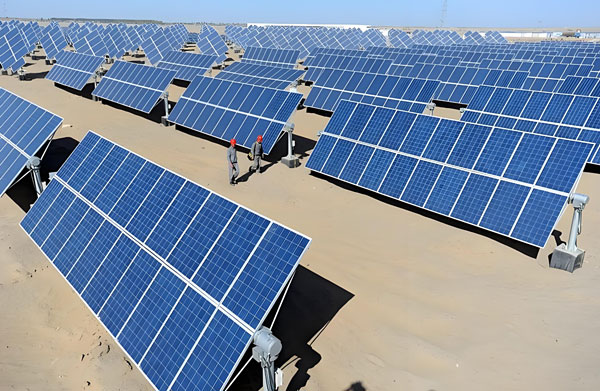
Regularly clean the surface of photovoltaic modules to remove dust, bird droppings, leaves, and other obstructions, in order to improve module transparency and power generation efficiency. The cleaning frequency is determined according to local environmental conditions, usually 1-2 times a month. At the same time, promptly clean up the weeds in the power plant site to prevent them from being too high and obstructing components or causing safety hazards such as fires.
4. Benefit analysis
(1) Economic benefits
Ground mounted photovoltaic power stations have good investment returns. On the one hand, obtaining stable power generation income through electricity sales can generate considerable cash flow during the operation period of the power station, calculated based on the local grid electricity price and the annual power generation of the power station;
On the other hand, it can enjoy renewable energy subsidy policies and tax incentives from national and local governments, further improving the profitability of the project. Through reasonable project planning, equipment selection, and operation and maintenance management, investment costs can generally be recovered around [X] years, and then enter a profitable period with high internal rate of return and net present value.
(2) Environmental benefits
Ground based photovoltaic power plants do not produce greenhouse gas emissions, pollutant emissions, or noise pollution during operation, and are a clean energy generation method. Each kilowatt hour of electricity is equivalent to reducing standard coal consumption by about X kilograms and carbon dioxide emissions by about X kilograms, which has a positive effect on improving atmospheric environmental quality and mitigating global warming trends. At the same time, the construction of photovoltaic power stations can promote the effective utilization of land resources and the improvement of the ecological environment. For example, building photovoltaic power stations in desert and Gobi areas can play a role in preventing wind and sand, and reducing soil erosion.
Related Solutions